목록
- Single Responsibility Principle 단일 책임 원칙
- Open-Closed Principle 개방-폐쇄 원칙
- Liskov Substitution Principle 리스코프 치환 원칙
- Interface Segregation Principle 인터페이스 분리 원칙
- Dependency Inversion Principle 의존 역전 원칙
- 단일 책임의 원칙
1) 클래스는 하나의 책임(역할)만 가져야 한다.
2) 변경의 이유가 하나뿐이어야 한다.
클래스
package Single;

public class EmailService {
	// 단일 책임 원칙을 적용한 클래스

	public void sendEmail(String email) {
		System.out.println("Email send to: " +email);
	} // end of sendEmail()
} // end of class
package Single;

public class UserService {
	// 단일 책임 원칙을 적용한 클래스

	public void createUser(String name) {
		System.out.println("User Created: " +name);
	} // end of createUser()
} // end of class
실행
package Single;

public class SingleTest {
	public static void main(String[] args) {

		UserService us = new UserService();
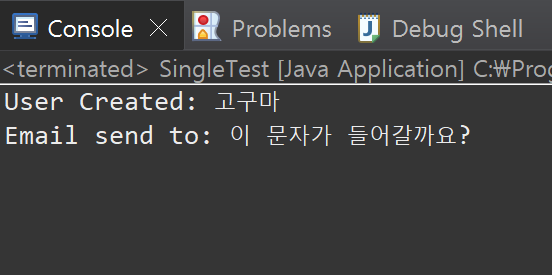
		us.createUser("고구마");

		EmailService es = new EmailService();

		es.sendEmail("이 문자가 들어갈까요?");


	} // end of main
} // end of class
실행 결과
- 개방-폐쇄 원칙
1) 소프트웨어 확장에는 열려있고, 수정에는 닫혀 있어야 한다.
2) 기존 코드를 수정하지 않고도 기능을 확장할 수 있어야 한다.
인터페이스
package Open;

public interface Payment {
	// 개방-폐쇄 원칙을 적용한 코드

	public void process();
} // end of interface
클래스
package Open;

public class PayPalPayment implements Payment{
	// 개방-폐쇄 원칙을 적용한 코드

	@Override
	public void process() {
		System.out.println("페이팔 결제 시스템");
	}
} // end of class
package Open;

public class CreditCardPayment implements Payment {
	// 개방-폐쇄 원칙을 적용한 코드

	@Override
	public void process() {
		System.out.println("신용카드 결제 시스템");
	}
}
package Open;

public class KakaoPayPayment implements Payment {

	@Override
	public void process() {
		System.out.println("카카오 결제 시스템");
	}
} // end of class
팩토리 클래스
package Open;

public class PaymentFactory {
	public static Payment getPayment (String type) {

		if(type.equalsIgnoreCase("credit")) {
			return new CreditCardPayment();
		} else if(type.equalsIgnoreCase("paypal")) {
			return new PayPalPayment();
		} else if(type.equalsIgnoreCase("kakao")) {
			return new KakaoPayPayment();
		}
		throw new IllegalArgumentException("Invaild payment type: " + type);
	} // end of getPayment
} // end of class
실행
package Open;

public class OpenTest {

	private Payment payment;

	public OpenTest(Payment payment) {
		this.payment = payment;
	} // end of 생성자

	// 결제 프로세스 진행
	public void processPayment() {
		payment.process();
	} // // 주입된 객체의 process() 실행

	public static void main(String[] args) {
		Payment payment1 = PaymentFactory.getPayment("credit");
		payment1.process();

		Payment payment2 = PaymentFactory.getPayment("paypal");
		payment2.process();

		Payment payment3 = PaymentFactory.getPayment("kakao");
		payment3.process();

	} // end of main
} // end of class
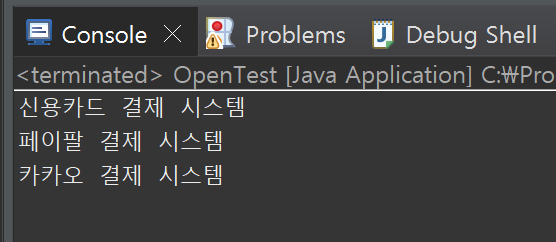
실행 결과
- 리스코프 치환 원칙
1) 자식 클래스는 부모 클래스를 대체할 수 있어야 한다.
2) 즉, 부모 클래스에서 정의한 기능이 자식 클래스에서도 동일하게 동작해야 한다.
추상적
package Liskov;

public abstract class Bird {

	public abstract void move();
} // end of class
클래스
package Liskov;

public class FlyingBird extends Bird {

	@Override
	public void move() {
		System.out.println("하늘을 날아서 이동");
	} // end of move()
} // end of class
package Liskov;

public class Penguin extends Bird {

	@Override
	public void move() {
		System.out.println("수영해서 이동");
	} // end of move()
} // end of class
실행
package Liskov;

public class LiskovTest {

	public static void main(String[] args) {

		FlyingBird FB = new FlyingBird();
		FB.move();

		Penguin Pg = new Penguin();
		Pg.move();

	} // end of main
} // end of class
실행 결과

- 인터페이스 분리 원칙
1) 클라이언트는 자신이 사용하지 않는 메서드에 의존하지 않아야 한다.
2) 여러 작은 인터페이스가 하나의 큰 인터페이스보다 낫다.
인터페이스
package Interface;

public interface Eatable {

	public void eat();
}
package Interface;

public interface Workable {

	public void work();
}
클래스
package Interface;

public class Human implements Workable, Eatable{

	@Override
	public void work() {
		System.out.println("Human Working");
	} // end of work()

	public void eat() {
		System.out.println("Human eating");
	} // end of eat()
} // end of class Human
package Interface;

public class Robot implements Workable {

	@Override
	public void work() {
		System.out.println("Robot working");
	}
} // end of Robot
실행
package Interface;

public class InterfaceTest {

	public static void main(String[] args) {

		Workable wa1 = new Human();
		Workable wa2 = new Robot();

		wa1.work();
		wa2.work();

		Eatable ea1 = new Human();
		ea1.eat();


	} // end of main
} // end of class
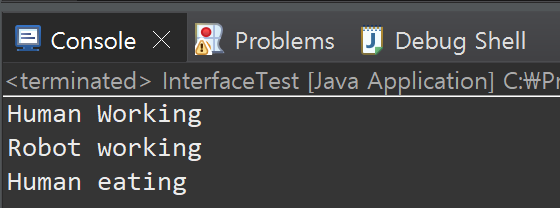
실행 결과
- 의존 역전 원칙
1) 고수준 모듈이 저수준 모듈에 의존해서는 안 된다.
2) 추상화된 인터페이스에 의존해야 한다.
고수준 모듈 : 인터페이스(Interface)나 추상(Abstract) 클래스 저수준 모듈 : 메인클래스나 객체
--> 추상화에 의존해야지 구체화에 의존하면 안된다 의미이다.
인터페이스
package Dependency;

public interface InputDevice {
	String getInput();
}
클래스
package Dependency;

public class Keyboard implements InputDevice {

	@Override
	public String getInput() {
		return "키보드 입력";
	}
}
package Dependency;

public class Mouse implements InputDevice {

	@Override
	public String getInput() {
		return "마우스 입력";
	}
}
package Dependency;

public class Computer {
	private InputDevice inputDevice;

	public Computer(InputDevice inputDevice) {
		this.inputDevice = inputDevice;
	}

	public void userInputDevice() {
		System.out.println(inputDevice.getInput());
	}
}
실행
package Dependency;

public class DependencyTest {

	public static void main(String[] args) {

		InputDevice keyboard = new Keyboard();
		InputDevice mouse = new Mouse();

		Computer computerKeyboard = new Computer(keyboard);
		computerKeyboard.userInputDevice();

		Computer computerMouse = new Computer(mouse);
		computerMouse.userInputDevice();

	}
}
실행 결과
